Refrigerated Insulated Container: How to Maintain Temperature-Sensitive Products During Transportation?
Temperature control is essential when transporting perishable goods, food products, pharmaceuticals, chemicals, and other temperature-sensitive materials. A Refrigerated Insulated Container helps maintain appropriate temperatures during storage and transport, protecting products from external heat and temperature fluctuations.
Businesses involved in cold-chain logistics, food distribution, pharmaceutical transportation, and industrial supply chains require reliable insulated container solutions to maintain product quality. The right container depends on insulation performance, temperature requirements, size, and intended application.
Keon Reftec Private Limited serves businesses that need refrigerated and insulated container solutions for transportation and storage. Understanding these containers' features, benefits, and applications can help businesses make informed purchasing decisions.
What Is a Refrigerated Insulated Container?
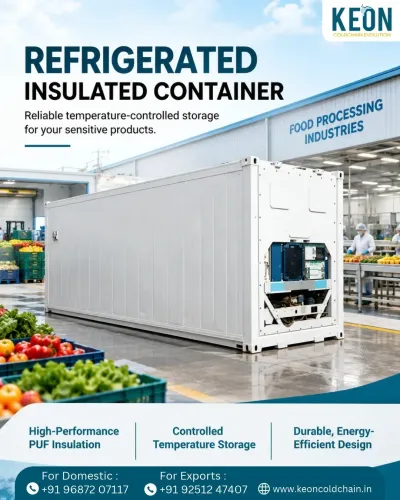
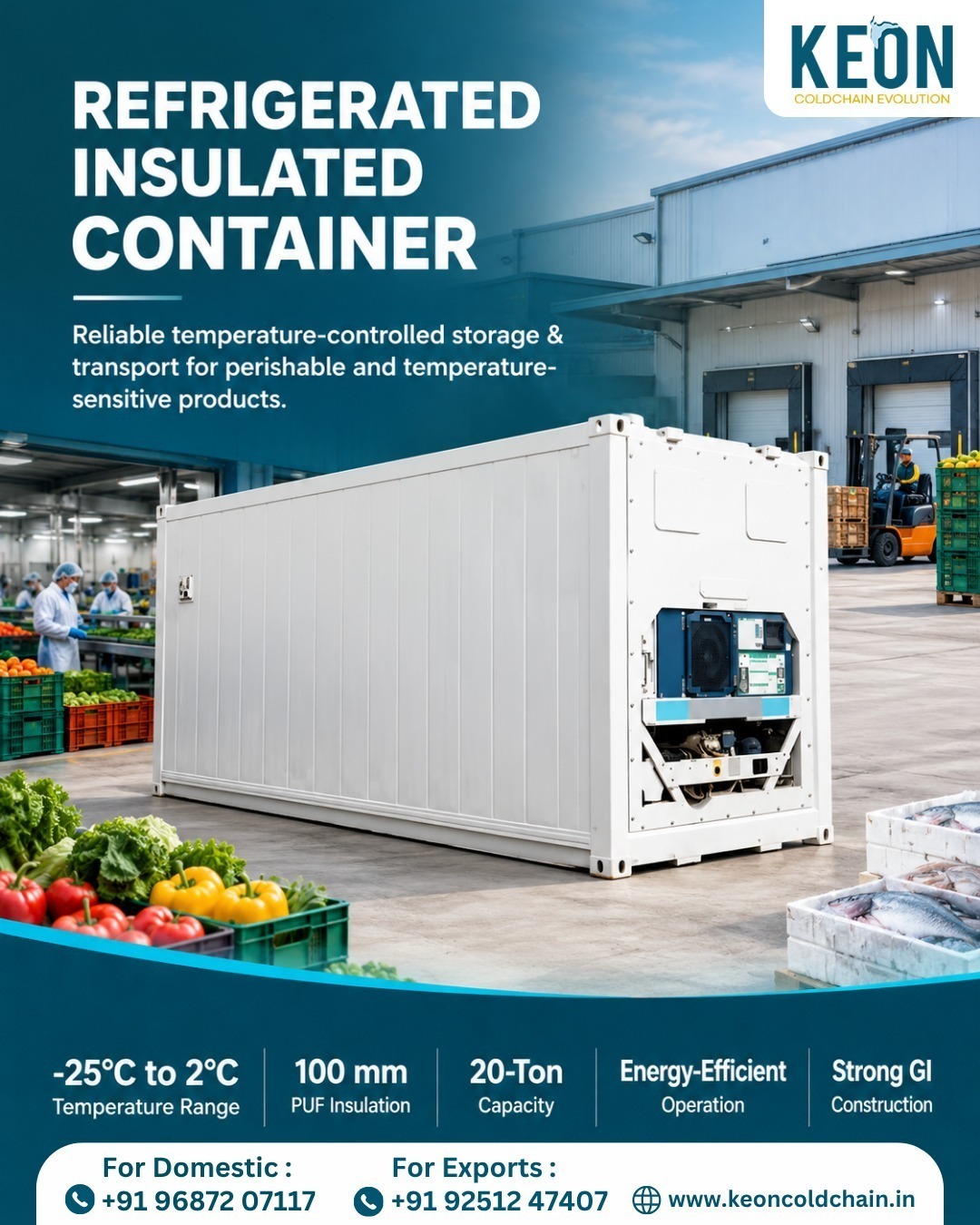
A refrigerated insulated container is a specially designed container that combines thermal insulation with refrigeration capabilities to help maintain a controlled internal temperature. The insulation reduces heat transfer between the inside and outside, while the refrigeration system maintains the required temperature range.
These containers help businesses transport or store temperature-sensitive products over short or long distances.
Depending on the design and application, refrigerated insulated containers may include insulated wall panels, temperature-control equipment, sealed doors, durable flooring, and monitoring systems.
What Are the Key Features of a Refrigerated Insulated Container?
When selecting a refrigerated insulated container, businesses should consider the following features:
1. Effective Thermal Insulation
Insulated walls, floors, and roofs minimise heat transfer and help maintain stable internal temperatures. Insulation performance depends on the material, thickness, construction, and seal quality.
2. Temperature Control
Refrigeration equipment helps maintain the temperature required for specific products. The appropriate temperature range depends on the cargo, transportation conditions, and applicable storage guidelines.
3. Durable Construction
A robust container structure supports regular handling and transportation. Material selection, structural design, and door construction contribute to durability and operational reliability.
4. Secure Door Sealing
Proper door seals help reduce unwanted heat exchange and prevent warm air from entering the container. Effective sealing also supports refrigeration efficiency.
5. Flexible Storage and Transportation
Depending on its configuration, a refrigerated insulated container can support different cargo volumes and transportation requirements across logistics and supply chain operations.
What Are the Applications of Refrigerated Insulated Containers?
Refrigerated insulated containers are used across industries where temperature management is important.
* Food and beverage industry: Transportation of dairy products, fruits, vegetables, frozen foods, and other perishables.
* Pharmaceutical industry: Transporting medicines and other sensitive healthcare products under specified storage conditions.
* Cold-chain logistics: Supporting temperature management during distribution, warehousing, and transportation.
* Agriculture: Helping preserve harvested produce quality during handling and distribution.
* Chemical industry: Transporting compatible temperature-sensitive materials under appropriate safety and storage conditions.
* Retail and supermarkets: Supporting the movement and distribution of chilled and frozen products.
Selecting a container suited to the cargo helps businesses maintain product quality and reduce the risk of temperature-related losses.
How Do You Choose the Right Refrigerated Insulated Container?
Choosing the right refrigerated insulated container requires careful evaluation of your operational needs.
Consider these important factors before purchasing:
* Temperature requirements: Identify the required operating temperature for your products.
* Insulation performance: Evaluate the insulation material, thickness, and thermal efficiency.
* Container capacity: Select a size that accommodates the required cargo volume.
* Refrigeration system: Check cooling capacity and suitability for the expected ambient conditions and cargo load.
* Door sealing: Ensure the container seals effectively to reduce unwanted heat transfer.
* Power requirements: Verify the availability and compatibility of the required power supply.
* Maintenance and servicing: Consider access to technical support, spare parts, and routine maintenance.
* Transportation conditions: Assess loading frequency, travel duration, ambient temperatures, and handling requirements.
Comparing these factors helps businesses select a container that meets their temperature-control and logistics requirements.
What Are the Benefits of Refrigerated Insulated Containers?
Better Temperature Management
Insulation and appropriate refrigeration equipment help maintain required temperatures for sensitive products during transportation and storage.
Reduced Product Spoilage
Proper temperature management, combined with appropriate handling procedures, can reduce the risk of spoilage and quality deterioration for perishable goods.
Improved Cold-Chain Efficiency
Refrigerated containers support temperature-controlled logistics by helping businesses move sensitive products between locations.
Protection Against External Temperature Changes
Insulated construction reduces heat transfer from the surrounding environment, helping maintain more consistent internal conditions.
Versatile Industrial Applications
These containers can serve different industries, including food processing, pharmaceuticals, agriculture, distribution, and cold-chain logistics, depending on their specifications.
Why Choose a Refrigerated Insulated Container Supplier in India?
Businesses sourcing temperature-controlled containers should evaluate product quality, insulation performance, refrigeration compatibility, customisation options, and technical support.
A reliable Refrigerated Insulated Container Supplier in India can help buyers identify suitable solutions based on cargo requirements, transportation conditions, and storage capacity.
When evaluating a Refrigerated Insulated Container Distributor in Gujarat, businesses should consider product availability, delivery arrangements, specifications, and after-sales assistance.
Companies searching for a Refrigerated Insulated Container Manufacturer in Ahmedabad should also assess manufacturing capabilities, material quality, construction standards, and the availability of application-specific configurations.
Contact Keon Reftec Private Limited to discuss your refrigerated insulated container requirements and identify an appropriate solution for your business application.
Frequently Asked Questions
1. What is a refrigerated insulated container used for?
A refrigerated insulated container transports or stores temperature-sensitive products by combining thermal insulation with refrigeration, where required.
2. Which industries use refrigerated insulated containers?
These containers are used in food processing, agriculture, pharmaceuticals, cold-chain logistics, retail distribution, and other industries that require controlled temperatures.
3. How do I choose the right refrigerated insulated container?
Consider the required temperature range, cargo type, insulation performance, container capacity, refrigeration specifications, power requirements, and maintenance support.
Keywords